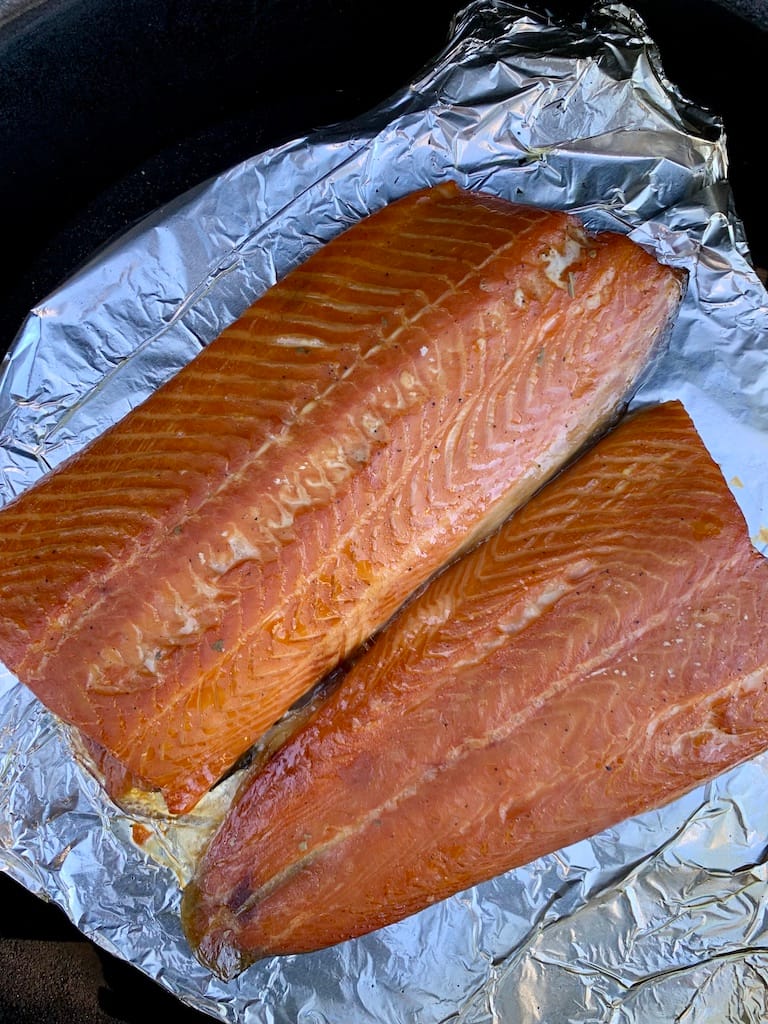
The previous owners of our home installed a beautiful stone patio that includes a full outdoor kitchen with a built-in Big Green Egg. If you haven’t seen an Egg, they are dark green oval ceramic cookers that look like giant golf balls. They have something of a cult-like following among serious barbecue enthusiasts, of which I am not. But since I love smoked salmon, I decided I should at least become a novice Egg-thusiast.
Here is my recipe, which I have followed multiple times now with great success. As one user wrote in a Big Green Egg online forum: “Even my mistakes in an Egg turn out delicious.”
Day 1: Brine
Your task on day 1 is to acquire 3-4 pounds of fresh wild caught salmon fillets with the skin on one side. Combine and mix the following ingredients in a bowl:
- 1 cup brown sugar
- 1/2 cup kosher salt
- 2-3 medium cloves finely chopped garlic
- 1-2 tsp freshly grated ginger
- 1/2 tsp black pepper
- 2 leaves crumbled bay leaves
Put the salmon in a flat glass cooking tray, spread the brine over the top side of the fillets, cover with plastic wrap, and put in the refrigerator. After a few hours in the refrigerator, a liquid mixture will form at the bottom of the tray. I like to brine for 24 hours, flipping the fillets to be skin side up after about 12 hours in order to allow the flesh to fully soak in the brine.
Day 2: Air Dry
After a day the brined salmon will become firm and the extracted liquid will be gathering in the bottom of the glass tray. Take the salmon out, and rinse each fillet thoroughly under running water while brushing off the brine with your hand. Don't skimp on the rinsing because too much brine will result in the salmon being too salty. Clean out the glass tray, and place the salmon fillets back in skin side down after being blotted dry on both sides with paper towels. Cover again with plastic wrap for another 24 hours. This step results in the salmon fillets having a dry and tacky texture that is critical to retaining the color and flavor of the smoke.
Day 3: Grill
At least an hour before you start grilling, soak your wood chips in water to ensure they burn slowly on the grill. I found a wood chip soaker to be a handy accessory for this. The type of wood chips you use are a personal preference - e.g. cherry, apple - but I recommend trying a few different types to figure out which one imparts the best flavor for you.
Put some fresh charcoal in the Big Green Egg and use a starter to get the fuel going. I usually leave both the bottom and top vents fully open to get the fire going and then spread the coals out after 10-15 minutes. I fill my smoker tin with wet chips, place them in the center of the fire, and give them a few minutes to start to smoke.
A key element to smoking on an Egg is the ceramic plate setter, which fits above the burning coals to ensure you have only indirect heat on your meat. I cover my plate setter with tin foil and spray with cooking spray to simplify cleanup (and to avoid any allergy contamination). I put the salmon directly on the plate setter, close the lid, and do what all great barbecue and smoking enthusiasts do: worry.
I smoke my salmon for about 2.5-3 hours, but this timing should be adjusted by taste. At 2.5 hours, I usually find the salmon to have the perfect level of moisture and smokey flavor. If you are one of those people who like the harder and smokier thin edges of smoked salmon, you might want to go closer to 3-3.5 hours.
I’m not sure how much I am helping my Big Green Egg, but I constantly fiddle with the vents to get the right temperature and level of smoke. I find the lower temperatures produce less smoke, but the higher temperatures risk overcooking. But the truth is, the place setter helps ensure my mistakes never impact the quality of the finished product.
Day 3+: Eat
We usually start eating the salmon right off the grill, usually on thin salted crackers. After it cools, we wrap each fillet in plastic wrap and put in the refrigerator, where it magically disappears over the coming days.